For UK energy consultants navigating the post-Brexit landscape, understanding the European Union’s Farm to Fork Strategy might seem tangential to biofuel policy work. However, this ambitious food sustainability framework is creating significant ripple effects that are fundamentally reshaping EU biodiesel regulations in ways that demand attention from anyone advising on renewable transport fuels. The strategy has intensified existing tensions between food security, agricultural sustainability, and renewable energy targets, forcing policymakers to reconsider how agricultural resources should be allocated. For the UK, now operating outside EU structures but deeply integrated with European energy markets, these developments present both challenges and opportunities. The fundamental question facing UK policymakers is whether to maintain regulatory alignment with evolving EU standards or to chart an independent course – and the answer will have profound implications for domestic biodiesel producers, agricultural stakeholders, and the broader decarbonisation of transport.
Understanding the Farm to Fork Strategy’s Core Objectives
To grasp why a food policy is influencing energy markets, we need to understand what the Farm to Fork Strategy actually aims to achieve. Launched in May 2020 as a central pillar of the European Green Deal, the strategy sets out an ambitious vision for transforming Europe’s food system into a global standard for sustainability. The framework rests on three interconnected pillars: ensuring food security for Europe’s population, reducing the environmental and climate footprint of food production and consumption, and making sustainable food more affordable and accessible.
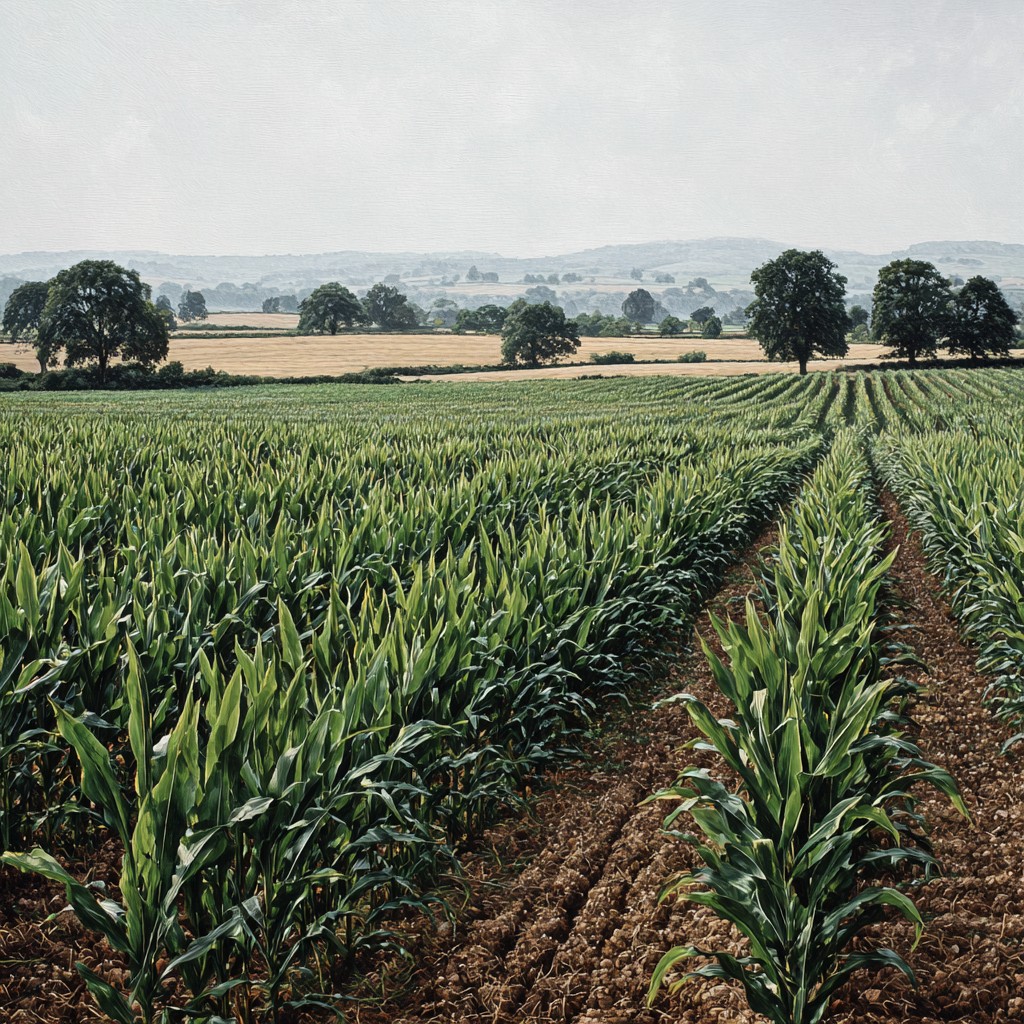
The strategy’s specific targets are striking in their ambition. The EU aims to reduce pesticide use by fifty percent by 2030, increase organic farming to cover twenty-five percent of agricultural land, and cut nutrient losses from fertilisers by half. These aren’t merely aspirational goals – they represent legally binding commitments that will reshape European agriculture fundamentally. When you consider that biodiesel production in Europe relies heavily on crops like rapeseed, wheat, and maize, it becomes clear why a policy focused on sustainable food production inevitably affects fuel markets.
The inherent tension lies in land use competition. Agricultural land can be used to grow food crops, cultivate feedstocks for biofuels, or be managed to enhance biodiversity and carbon sequestration. The Farm to Fork Strategy essentially asks whether devoting agricultural resources to fuel production aligns with broader sustainability goals, particularly when that land could instead support food security or ecological restoration. This question has moved from theoretical debate to practical policy constraint.
The Biodiesel Policy Collision: Where Food Meets Fuel
The REDII Framework and Crop-Based Biofuel Limits
The Renewable Energy Directive II, which came into force in 2018, had already begun addressing concerns about crop-based biofuels before the Farm to Fork Strategy emerged. REDII established a seven percent maximum limit for the contribution of food and feed crop-based biofuels towards renewable energy targets in transport, effectively capping their use at 2019 consumption levels. This ceiling exists primarily because of concerns about indirect land-use change, a phenomenon whereby increased demand for biofuel crops can push food production onto previously uncultivated land, including forests and grasslands, potentially creating more carbon emissions than the biofuels save.
The Farm to Fork Strategy has intensified scrutiny of these limits. Environmental advocacy groups and some member states have argued that even the seven percent cap remains too generous, given the strategy’s emphasis on preserving agricultural land for food production and biodiversity enhancement. This has created political pressure to further restrict crop-based biofuels, though industry stakeholders counter that such restrictions could undermine renewable energy targets and strand existing production infrastructure. Understanding this dynamic is crucial because it reveals how food policy considerations are now actively constraining biofuel policy options, rather than simply influencing them.
Advanced Biofuels and the Feedstock Transition
EU policy responses to these tensions have focused heavily on steering the biodiesel sector towards advanced biofuels produced from waste materials, agricultural residues, and algae rather than food crops. REDII creates incentives for these advanced fuels through a separate sub-target requiring member states to achieve at least three and a half percent advanced biofuels in transport energy by 2030. The Farm to Fork Strategy reinforces this transition by emphasising circular economy principles – the idea that agricultural waste and by-products should be valorised rather than discarded.
However, this policy-driven transition faces significant practical challenges. The availability of genuine waste feedstocks is limited, and competition for these materials is intensifying as multiple sectors seek to demonstrate circular economy credentials. Used cooking oil, animal fats, and agricultural residues all have finite supply limits, and scaling production of genuinely novel feedstocks like algae remains technologically and economically challenging. Production costs for advanced biofuels typically exceed those for conventional crop-based alternatives, creating questions about long-term market viability without sustained policy support. For energy consultants advising clients on biodiesel strategy, this feedstock transition represents perhaps the most significant market transformation currently underway, driven substantially by the food sustainability agenda that the Farm to Fork Strategy embodies.
Sustainability Criteria Intensification Under Farm to Fork
Beyond shifting feedstock preferences, the Farm to Fork Strategy has catalysed discussions about tightening the sustainability criteria that biofuel feedstocks must meet. Current REDII requirements mandate greenhouse gas savings compared to fossil fuels and prohibit sourcing from high biodiversity or high carbon stock land. However, these criteria don’t fully capture the Farm to Fork Strategy’s broader environmental ambitions around pesticide reduction, nutrient management, and biodiversity enhancement.
Policy discussions now emerging at EU level explore whether sustainability certification for biofuel feedstocks should incorporate additional requirements reflecting Farm to Fork principles. This could include maximum pesticide application thresholds, biodiversity impact assessments for feedstock cultivation areas, or water usage limits. Whilst these proposals remain under debate rather than settled policy, their potential impact warrants attention. Enhanced sustainability criteria could effectively narrow the pool of acceptable feedstocks, even among crops currently compliant with REDII standards. A rapeseed crop grown using conventional farming methods might meet existing renewable energy criteria but fall short of intensified standards incorporating Farm to Fork principles.
This creates market uncertainty for biodiesel producers who must make long-term infrastructure investments whilst sustainability requirements remain in flux. For UK energy consultants, understanding these evolving standards becomes essential when advising clients on feedstock sourcing strategies and supply chain resilience.
The UK’s Post-Brexit Biodiesel Landscape
The Renewable Transport Fuel Obligation in Transition
The UK’s Renewable Transport Fuel Obligation operates as the domestic mechanism for mandating renewable fuel use in transport. Following Brexit, the UK initially retained much of the RTFO framework that had been developed in alignment with EU directives, but the government now possesses regulatory autonomy to diverge from European standards. Current RTFO requirements include targets for overall renewable fuel content and specific sub-targets for development fuels, which largely correspond to what the EU terms advanced biofuels.
Recent UK government consultations have explored whether to adjust crop-based biofuel limits, how to support advanced fuel development, and whether to introduce new sustainability criteria beyond those inherited from EU frameworks. The Department for Transport has indicated intention to support the transition towards advanced fuels whilst maintaining the RTFO as a technology-neutral mechanism. This stated position leaves considerable room for interpretation regarding how closely the UK will track evolving EU standards as they respond to Farm to Fork Strategy influences.
Divergence Opportunities and Trade-offs
The UK faces genuine choices about regulatory trajectory. It could maintain more generous limits for crop-based biodiesel than the EU, arguing that domestic agricultural conditions and food security contexts differ from continental Europe. Alternatively, it could adopt different sustainability criteria that reflect UK-specific environmental priorities, such as particular emphasis on peatland protection or water quality in agricultural areas. Some stakeholders advocate for focusing policy support more heavily on alternative decarbonisation pathways for transport, such as electrification or hydrogen, rather than matching EU biofuel ambitions.
Each divergence option carries distinct trade-offs. Maintaining higher crop-based biofuel limits might benefit UK farmers growing oilseed rape and support domestic biodiesel production capacity, but could invite criticism about environmental credibility and create friction with the UK’s own net-zero commitments. Conversely, adopting stricter standards than the EU might enhance the UK’s green credentials but could disadvantage domestic producers competing against European counterparts operating under different rules. Perhaps most significantly, regulatory divergence creates potential trade barriers for UK biodiesel producers seeking to sell into EU markets, where products must meet EU sustainability standards regardless of their country of origin.
Strategic Considerations for UK Alignment Decisions
When evaluating whether to align with EU biodiesel policy as it evolves under Farm to Fork influences, UK policymakers must weigh multiple interconnected factors. Trade relationships loom large in this calculus. The Trade and Cooperation Agreement includes provisions around maintaining a level playing field on environmental standards, though the precise implications for biofuel policy remain subject to interpretation. Significant divergence could complicate UK-EU trade relations beyond just the biodiesel sector itself.
Domestic agricultural interests present another key consideration. UK farmers currently growing biofuel feedstocks have legitimate concerns about market access and profitability if regulations shift dramatically. However, agricultural stakeholders aren’t monolithic – organic farmers and environmental land managers may favour stricter sustainability standards that align with Farm to Fork principles. Climate ambition credibility also factors into decision-making. The UK has positioned itself as a climate leader with ambitious net-zero targets, and biodiesel policy choices will be scrutinised for consistency with these commitments.
Practical supply chain realities constrain theoretical policy options. The UK’s limited domestic biodiesel production capacity means significant reliance on imports, primarily from the EU. Regulatory divergence that creates friction in biodiesel trade could threaten fuel supply security. Additionally, alignment decisions needn’t be binary – the UK could choose to align on certain policy dimensions whilst diverging on others, creating a nuanced regulatory position that reflects specific UK priorities and constraints.
Looking Forward: Implications for Energy Consultants and Industry Stakeholders
For UK energy consultants, biodiesel producers, fleet operators subject to RTFO obligations, and policymakers, the Farm to Fork Strategy’s influence on EU biodiesel policy creates a dynamic regulatory environment requiring careful monitoring. The strategy has fundamentally altered the political economy of biofuels in Europe, strengthening the hand of those who prioritise food security and agricultural sustainability over maximising renewable fuel volumes from crop-based feedstocks.
The UK’s post-Brexit position adds an additional layer of complexity. Every significant EU policy development in response to Farm to Fork principles – whether tightened sustainability criteria, reduced crop-based fuel caps, or enhanced support for advanced biofuels – prompts the question of whether the UK will follow suit. These aren’t merely technical regulatory questions; they involve fundamental choices about how the UK positions itself in relation to European markets, how it balances competing land-use priorities, and how it sequences different elements of transport decarbonisation.
Key uncertainties to monitor include the timing and stringency of any enhanced EU sustainability criteria emerging from Farm to Fork implementation, the outcomes of ongoing UK government consultations on RTFO evolution, and technological developments that might improve the economic viability of advanced biofuels. Successful navigation of this landscape requires understanding both the agricultural sustainability drivers reshaping European policy and the energy transition imperatives that make renewable fuels politically and strategically important. The intersection of food and fuel policy, once a niche concern, has become central to the future of transport decarbonisation on both sides of the Channel.